
A corporation must weigh several considerations in the modern enterprise IT landscape before determining if a cloud infrastructure is the best option. On the other hand, a lot of businesses are unable to transition to the cloud and must instead rely on their reliable legacy and on-premise software and apps to run their operations.
On-Premise Vs Cloud
The location is, in essence, what distinguishes on-premise software from cloud software. While cloud software is stored and maintained on the provider's servers and accessed via a web browser or other interface, on-premise software is installed and operated locally on a company's hardware infrastructure.
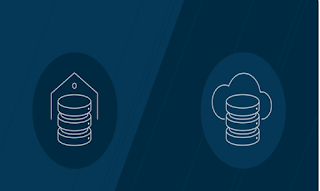
It's hardly surprising that cloud computing has become so popular; its appeal and potential offer businesses new levels of flexibility, from cost and time savings to increased agility and scalability. However, on-premise software, which is installed on a corporation's servers and protected by its firewall, was the only option available to businesses for a considerable amount of time and might still be sufficient for your needs as a business.
Furthermore, on-premise apps are dependable and safe, and provide businesses control over an aspect of their operations that the cloud frequently cannot match. However, IT decision-makers concur that to accomplish their business objectives, they will also need to use new cloud and SaaS apps in addition to their on-premise and legacy systems.
On-Premise Software
Data security will always be crucial, regardless of whether a business chooses to house its apps on-site or in the cloud. However, the choice of whether to host their applications on-site may already have been taken for companies operating in highly regulated sectors. Also, you may feel more at ease knowing that your data is housed on your internal computers and IT infrastructure.
An organization needs to buy a license or copy of the application to use on-premise software. Compared to cloud computing infrastructures, the program is licensed and the entire software instance is hosted on an organization's property, providing a higher level of security. So, if a company needed all this extra security, why would it "dip its proverbial toes" into the cloud?
The drawback of on-premise settings is that they can be far more expensive to manage and maintain than cloud computing environments due to the additional costs involved. Hardware for servers, software licensing, integration skills, and IT staff on hand to support and handle any issues are all necessary for an on-premise system. This doesn't even account for how much upkeep a business must perform when something malfunctions or fails.
Cloud Computing
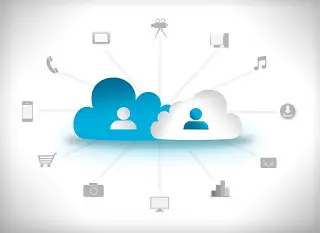
One important way that cloud computing varies from on-premises software is this. In an on-premise setting, a business hosts everything internally, while in a cloud setting, a third-party provider hosts everything on your behalf. This enables businesses to effectively scale up or down based on overall consumption, user requirements, and the expansion of a company, paying just as needed.
A cloud-based server hosts an organization's apps remotely by leveraging virtual technology. Businesses only pay for the resources they use, there are no capital costs, and data can be constantly backed up. The cloud is even more alluring to firms that intend to expand aggressively worldwide since it makes it easy to communicate with partners, clients, and other companies from any location.
Additionally, because everything is preconfigured, cloud computing offers almost instantaneous provisioning. As a result, once a company subscribes, any new software that is incorporated into your environment is immediately usable. Instant provisioning eliminates the need for installation and configuration time, allowing users to start using the program immediately.
For instance, EDI software was formerly only available on-premises, but more recently, advancements in cloud computing have made it possible for EDI providers to offer their services through an EDI Software as a Service (SaaS) model.
Key Differences of On-Premise Vs. Cloud
There are some key distinctions between an on-premises and a cloud system, as previously mentioned. The best course of action for your business will depend largely on your needs and the kind of solution you're after.
Deployment
On-Premises: Internally and within the on-premises IT infrastructure of a firm, resources are deployed. An enterprise is responsible for maintaining the solution and all of its related operations.
Cloud: Although cloud computing comes in various forms (public, private, and hybrid), in a public cloud computing environment, resources are hosted on the service provider's premises, but enterprises can access and use them as much as they want at any given time.
Cost
On-Premises: Businesses that use on-premise software deployment are in charge of the continuing expenses associated with server hardware, power, and space.
Cloud: Businesses that choose to use a cloud computing model only pay for the resources they use; they are not responsible for any maintenance or upkeep expenses, and the cost varies based on usage.
Control
On-Premises: Businesses keep all of their data in an on-premises environment and have complete control over what happens to it, for better or worse. For this reason, businesses in highly regulated sectors with additional privacy concerns are likely to be slower to adopt cloud computing than others.
Cloud: The issue of data ownership in a cloud computing environment is one that many businesses, as well as vendors, have encountered difficulties with. The data and encryption keys are stored with your third-party provider; therefore, you might not be able to access them in the event of an unforeseen circumstance resulting in downtime.
Security
On-premises: Businesses that handle extremely sensitive data, like the banking and government sectors, need to have a certain amount of protection and privacy, which is what an on-premises environment offers. Even if the cloud holds great potential, security remains a top priority for many companies. For this reason, an on-premises infrastructure makes more sense, even with its associated costs and disadvantages.
Cloud: The biggest obstacle to the adoption of cloud computing is still security concerns. IT departments worldwide are concerned about the numerous reported cloud breaches. Security hazards range from loss of intellectual property to employee personal information like login credentials.
Compliance
On-premises: Regardless of the industry, a large number of businesses nowadays are subject to regulatory regulation. There are many more, such as the Family Educational Rights and Privacy Act (FERPA), which protects student records in great detail, and other laws from the government and business community. The Health Insurance Portability and Accountability Act (HIPAA) is arguably the most well-known one on private health information. It is crucial for businesses that must abide by these rules to always be compliant and aware of the location of their data.
Cloud: If an enterprise decides to adopt a cloud computing model, it must make sure that the third-party provider complies with all applicable industry regulations and that due diligence has been done. Customers, partners, and employees' privacy must be guaranteed, and sensitive data must be safeguarded.
Hybrid Cloud Solutions
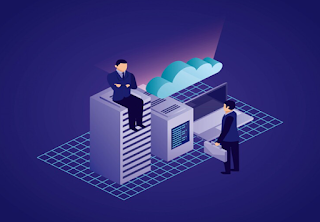
There is a model that combines the finest features of both on-premises and cloud computing environments, but there is also a genuine argument about the advantages and disadvantages of each that many businesses currently have in their workplaces.
An IT deployment architecture that combines elements of on-premises, private cloud, and public cloud computing is known as a hybrid cloud solution. The availability of a private cloud built on-site or via a hosted private cloud provider, a public cloud platform from a reliable third-party provider, and efficient wide area network (WAN) communication between those environments are prerequisites for a hybrid cloud architecture.
NIRA Systems Cloud Integration
You depend on integration to make your data flows function, regardless of the type of environment, you're looking for: moving processes and data into a cloud integration platform, adding software-as-a-service (SaaS) to address a specific business need, or operating as a SaaS company that thrives on responding to customer requests more quickly.
A scalable infrastructure that facilitates quick and secure file transfers, data transformation, any-to-any hybrid integration, and end-to-end visibility of all the data flowing across their dynamic ecosystems is essential for every successful business. With the help of NIRA SYSTEMs Cloud experts, businesses can expedite the ground-to-cloud and cloud-to-cloud integration processes. This makes it simple to link all of your data, on-premises or in the cloud, and to integrate apps, storage, and business platforms.
Business and technical users may create, manage, and track any B2B, application, cloud integration, and data integration processes with the help of NIRA SYSTEMs technical expertise.
To know more contact us on
contact@nirasystems.com